

March 31, 2015 – March 2, 2016
The Museum of the White Mountains, Main Gallery
Curated by Ben Amsden, rural sociologist, Director, Center for Rural Partnerships, Plymouth State University, Mike Dickerman, author, publisher, co-editor of the Appalachian Mountain Club Guide (2010 – present), Steve Smith, author, co-editor of the Appalachian Mountain Club Guide (2001 – present)

For 140 years trail clubs have been instrumental in the development of the White Mountains as a destination for visitors and residents seeking physical exertion, scenic beauty, spiritual refreshment, and hearty fellowship on mountain trails.
The clubs were formed for several purposes: to explore remote regions of the mountains, away from the usual tourist routes; to organize group “tramping” excursions for members, providing opportunities for hikers to socialize; and, perhaps most importantly, to work on trails, whether creating new trails, or maintaining existing trails. Over the decades the work of trail clubs has expanded to include conservation, education, and community involvement, while others have stuck to their original roots in trail work.
Though some peaked and then faded into oblivion, many of the clubs founded in the late 1800s and early 1900s are still activein the 21st century and can take pride in many lasting accomplishments.
The exhibition is organized around three key themes, each representing the contribution of trail clubs to the outdoor recreation landscape:
1. Sense of Place: Trail clubs help people connect not just to the activity of hiking but also to the club’s local region and the White Mountain region as a whole.
2. Sense of Purpose:Trail clubs leverage their resources and the resources of their members to create and maintain trails, educate visitors, and advocate for natural spaces.
3. Sense of Belonging: Trail clubs create opportunities for people to be part of a community and socialize with others.
Every year thousands of hikers set foot on the vast and varied trail network in the White Mountains. Whether trekking across the airy crest of Franconia Ridge, or wandering past waterfalls on the northern Presidentials, mountain enthusiasts reap the benefits of dedicated work by the trail clubs of the White Mountains. Each of these twenty or so clubs— many still active, others faded into oblivion—was, from its beginning, imbued with a sense of purpose. Two primary missions of the clubs have been to build and maintain trails, and to advocate for the protection and appropriate use of the mountain backcountry.


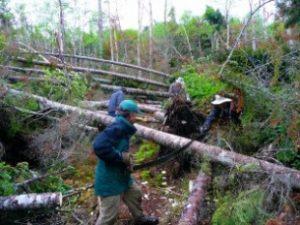
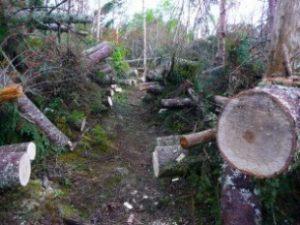
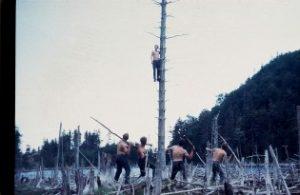
Wonalancet Out Door Club volunteers, using only hand tools, cleared hurricane blowdowns on the Kate Sleeper Trail in the Sandwich Range Wilderness. Douglas McVicar, photographer

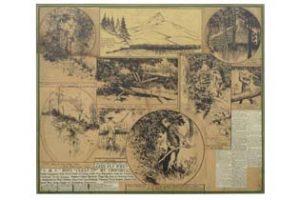
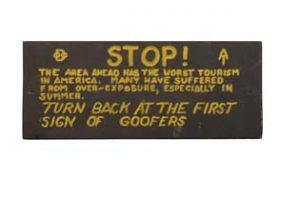
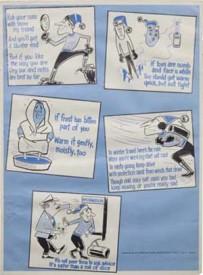
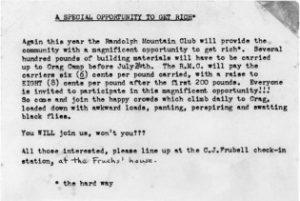
AMC poster. Courtesy of David Govatski.

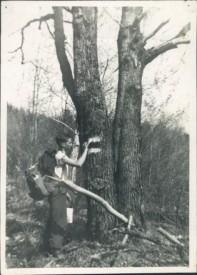
Dartmouth Outing Club members blaze the Appalachian Trail between Holts Ledge and Mount Cube in the 1930s. Courtesy of Dartmouth Outing Club.

A Dartmouth Outing Club member lays out the route of the new Hurricane Trail on Mount Moosilauke in 1935. Courtesy of Dartmouth Outing Club. Dartmouth Outing Club members blaze the Appalachian Trail between Holts Ledge and Mount Cube in the 1930s. Courtesy of Dartmouth Outing Club

This map drawn by Randolph trailbuilder Charles C. Torrey shows the extent of heavy logging on the Northern Presidentials as of 1905. The destruction of trails by lumbering led to the formation of the Randolph Mountain Club in 1910. Courtesy of the Randolph Mountain Club.

The measuring wheel that cartographer Louis Cutter used to calculate mileages along many White Mountain footpaths. Courtesy of the grandchildren of Louis F.

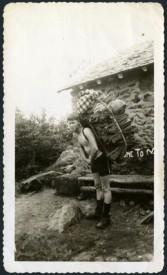
John Rayner Edmands, an early AMC member and master trail-builder, is known for his graded paths, including the namesake Edmands Path on Mount Eisenhower. Courtesy of the Appalachian Mountain Club.

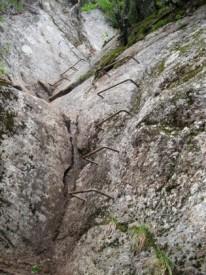
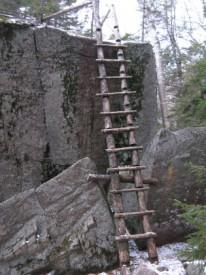
A Dartmouth Outing Club trail crew worker descends wooden steps pinned to a steep ledge on Mount Moosilauke’s Beaver Brook Trail. Steve Smith, photographer.

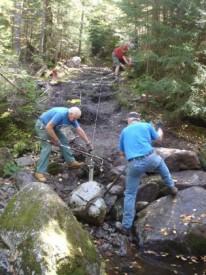
A volunteer crew from the Trailwrights uses a come-along at its full power to move a large rock during an erosion control project on the Mount Pemigewasset Trail in Franconia Notch State Park. Peggy Graham, photographer

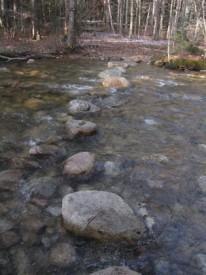
In 2012 the Chocorua Mountain Club and Trailwrights replaced several rocks swept away by Tropical Storm Irene. Steve Smith, photographer

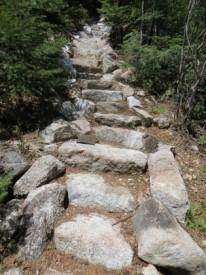
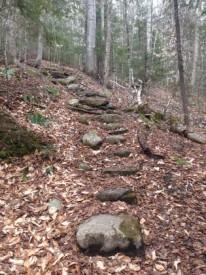
The Off the Beaten Path pro crew, with help from volunteers, constructed this rock staircase along the Wonalancet Out Door Club’s Blueberry Ledge Trail on Mount Whiteface. Steve Smith, photographer

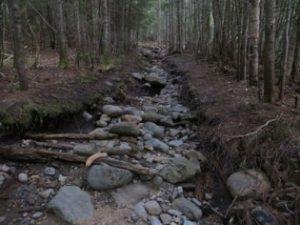
Severe erosion on the Asquam-Ridge Trail on Mount Moosilauke, caused by Tropical Storm Irene in 2011 and a summer cloudburst in 2014. The Dartmouth Outing Club plans to repair this section in 2015. Steve Smith, photographer.

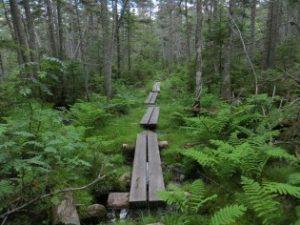
Plank bridges installed by the Appalachian Mountain Club on Mount Hale’s Lend-a-Hand Trail. Steve Smith, photographer .

AMC poster. Courtesy of David Govatski.

A Dartmouth Outing Club footbridge spans Gorge Brook on Mount Moosilauke. Steve Smith, photographer.